
Bel Air Hillside Construction: Caisson Foundations, Soldier Pile Walls, and Grading.
Building on Bel Air's hillside lots requires specialized foundations and grading. What homeowners need to understand about caissons, soldier pile walls, and HCR limits.

Why hillside foundations are different
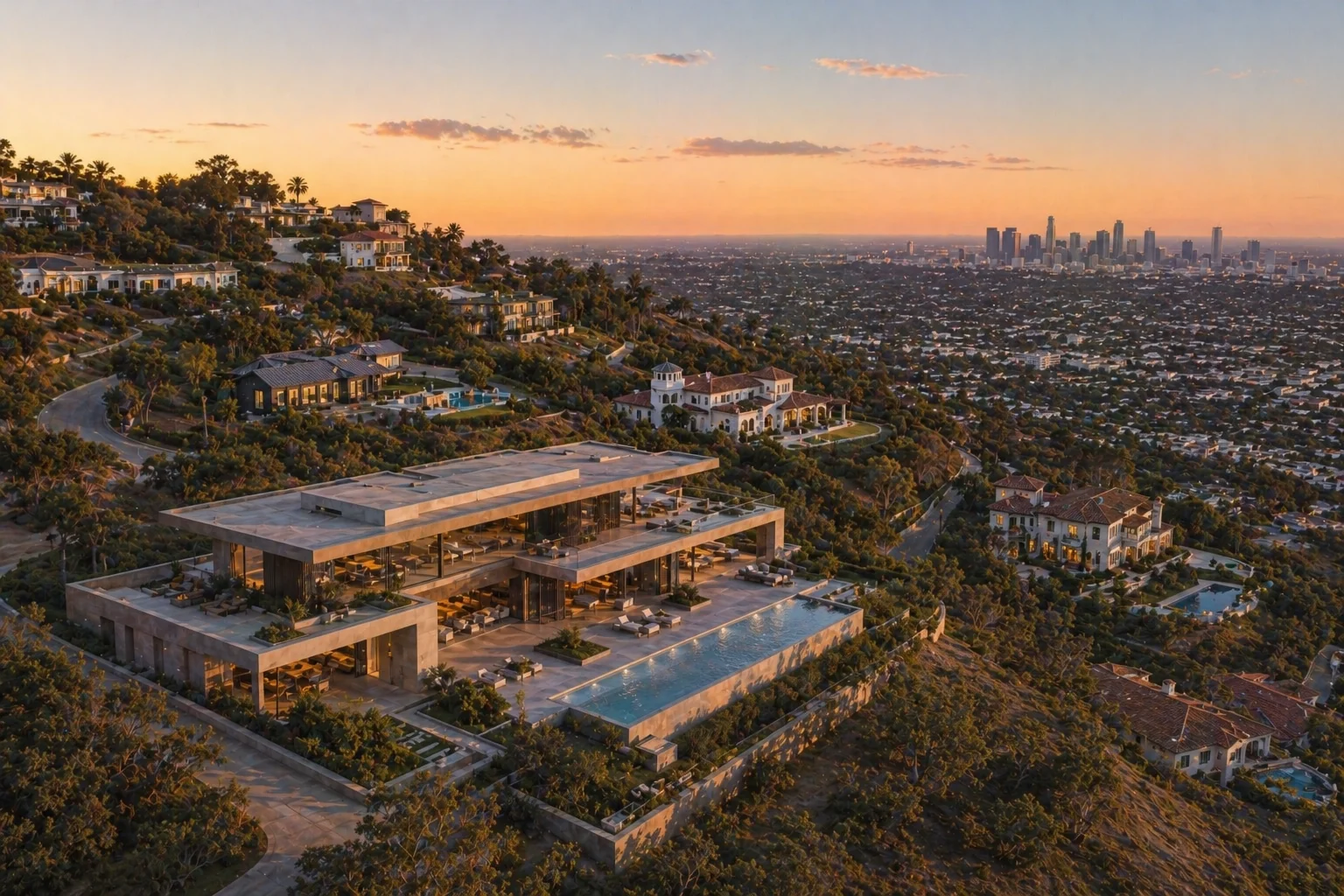
Bel Air sits in the Santa Monica Mountains foothills. Most lots have significant grade — 15% to 50%+ slope — and complex soil conditions including expansive clay, weathered shale, and old fill. These conditions make standard slab-on-grade or stem wall footings unsafe; the structure would settle, slide, or fail under earthquake loading.
The two primary deep-foundation systems for Bel Air are caisson piers and soldier pile walls. Caissons are large-diameter (typically 24–48 inch) reinforced concrete columns drilled into competent soil or bedrock — often 30–60 feet deep. Soldier pile walls are vertical steel piles driven or drilled in a row, with concrete or shotcrete lagging between them, used to retain cut slopes.
Both systems require a geotechnical engineering report before design can begin. The geotech report determines pile depth, soil bearing values, and seismic design parameters.
Hillside Construction Regulation (HCR)
Los Angeles’ Hillside Construction Regulation imposes specific limits on hillside development that don’t apply to flat lots. Key constraints:
- Grading quantity caps: typical maximum 1,000 cubic yards per project without discretionary review; larger grading triggers a Site Plan Review.
- Retaining wall heights: maximum 12 feet for any single wall, with 5-foot horizontal step required between stacked walls.
- Residential Floor Area (RFA) calculations: HCR includes basement and subterranean garage areas in the buildable square footage calculation, which is more restrictive than non-hillside lots.
- Driveway slope: maximum 20% slope, with 15% recommended for fire access.
The HCR was substantially updated in 2017 in response to widespread frustration with extreme hillside grading. Properties with prior approvals issued before 2017 may have grandfathered rights, but any modification triggers full HCR review.
The geotechnical report
A geotechnical investigation is the single most important pre-design document for a Bel Air project. The geotechnical engineer drills 2–6 borings on the property, collects soil samples, runs lab tests for shear strength, expansion potential, and chemical content, and produces a report recommending foundation type, pile depth, soil bearing values, lateral earth pressures for retaining walls, seismic site classification, and drainage requirements.
Geotechnical reports for Bel Air typically cost $8,000–$25,000 depending on lot size and access. They take 4–8 weeks to complete. Architectural and structural design cannot finalize until the report is in hand — designing on assumed soil conditions and then "fixing" the design after the report is the most common cause of major redesigns and budget overruns.
Construction logistics
Beyond engineering, the practical logistics of building on a Bel Air hillside lot are often the biggest schedule risk. Narrow private roads, gated communities with HOA construction restrictions, limited materials staging area, and tight neighbor proximity all complicate construction.
Crane operations require careful planning — many Bel Air lots cannot accommodate a standard tower crane and require boom truck or mobile crane staging. Concrete pumping for caisson pours often runs 200–400 feet from the pump to the pour site, requiring specialized line-pump equipment.
Haul-route permits from LADOT govern truck movement during foundation excavation and grading. Most Bel Air HOAs add additional restrictions: weekday-only construction, no Saturday work, mandatory pre-construction neighbor meetings, and damage deposits for road repairs.
Common questions.
Do I need a caisson foundation for my Bel Air home?
Most likely, yes — but only your geotechnical engineer can confirm. Properties with significant slope (typically over 15%), expansive clay soils, old fill, or proximity to known fault traces almost always require caissons or soldier pile walls. Flat or near-flat Bel Air lots in the lower elevations may qualify for standard footings.
How much do hillside foundations cost in Bel Air?
Caisson foundation systems for a typical Bel Air home cost $150,000 to $500,000 or more, depending on pile count, depth, and access. This is on top of standard footing and slab costs. Soldier pile retaining walls add $400–$900 per linear foot for typical 8–12 foot heights.
What is the Hillside Construction Regulation's grading limit?
The HCR caps grading at 1,000 cubic yards per project for ministerial (over-the-counter) approval. Larger grading quantities require Site Plan Review through the Department of City Planning, adding 4–9 months to the approval timeline. Retaining wall heights cap at 12 feet per wall, with a required 5-foot horizontal step before stacking another wall.
15+ years acquiring, financing, and developing real estate. Has led over $1 billion in transactions across the U.S. before founding Composite. Florida CGC1540052 · California CSLB #1155003.