
Owner's Representation vs. General Contractor: What's the Difference and Which Do You Need?.
How owner's rep and GC roles differ, when to hire an owner's rep, fee structures, and how the alignment of incentives changes project outcomes.

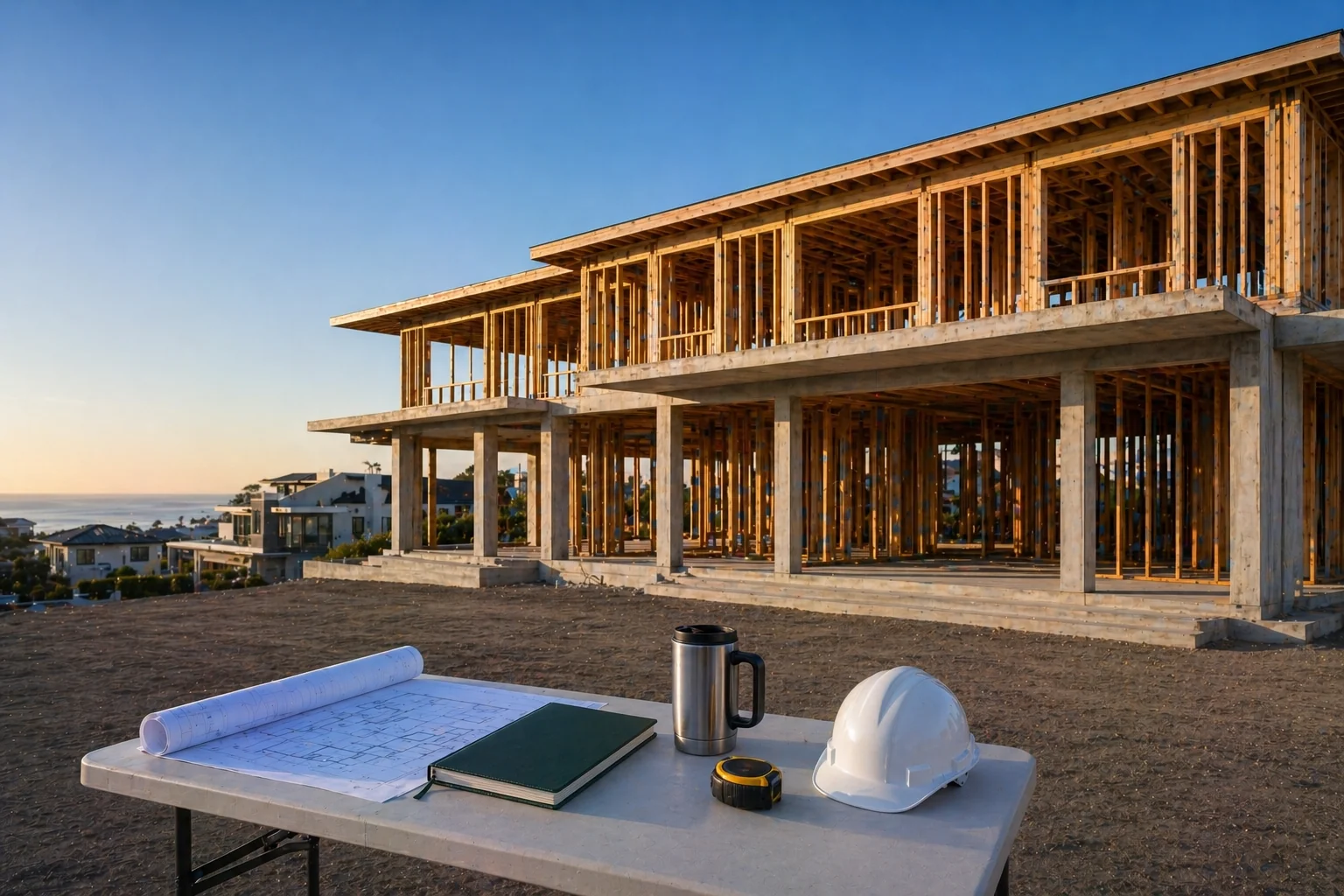
What an owner’s rep does
An Owner’s Representative (often called an Owner’s Rep or Project Manager) acts as an extension of the owner during design and construction. Their job is to protect the owner’s interests against the contractor, the architect, and consultants — none of whom report to the owner directly in a traditional structure.
Typical owner’s rep responsibilities: managing the architect selection and contract; reviewing design progress against the program and budget; reviewing GC bids and pay applications; approving change orders; conducting on-site quality control; tracking schedule against milestones; coordinating with HOAs, neighbors, and authorities having jurisdiction; and reporting to the owner regularly with status, risk, and decision points.
In effect, the owner’s rep is the owner’s eyes and ears when they can’t be on-site every day. On a complex luxury residential project, this can require 15–40 hours per week of focused attention.
What a general contractor does
A General Contractor (GC) is hired to build the project. The GC is responsible for procuring and managing subcontractors, ordering materials, coordinating site logistics, ensuring code compliance, passing inspections, maintaining safety, and delivering the finished project on schedule and within contract value.
The GC reports to whoever holds their contract — typically the owner directly, or through a Construction Manager / Owner’s Rep on more complex projects. The GC’s incentives are aligned with their fee and contract structure: a fixed-price contract incentivizes minimizing scope; a Cost-Plus contract incentivizes maximizing transparency; a GMP contract incentivizes managing risk.
When you need an owner’s rep
Owner’s representation is most valuable on projects where: the owner doesn’t live near the project (out-of-state second homes, international owners); the owner has limited construction experience and the project value justifies a dedicated advocate (typically $3M+); the project has complex programmatic requirements (multi-building estates, mixed-use, specialty programs); the owner is balancing multiple simultaneous projects.
Owner’s rep services typically run 2–6% of total project cost. On a $10M project, that’s $200,000–$600,000 — but an effective owner’s rep typically saves multiples of their fee through earlier identification of risks, better contract terms, fewer accepted change orders, and tighter execution discipline. Composite provides owner’s representation for residential and commercial projects across Los Angeles, Santa Barbara, and South Florida, with remote advisory available for owners building in other markets.
Conflicts of interest
A single firm should not act as both owner’s rep AND general contractor on the same project. The roles have inherent conflicts: the owner’s rep should be reviewing the GC’s pay applications, change orders, and quality of work — not approving their own.
However, the same firm can offer owner’s rep services on one project and GC services on another, as long as the relationships are clear and contractually separated. Many sophisticated construction firms (including Composite) offer both services and structure each engagement transparently.
When evaluating a firm offering owner’s representation, confirm that the firm’s incentive structure (fixed fee, hourly billing, or % of project) aligns with the owner’s interests rather than maximizing project cost.
Common questions.
How much does an owner's rep cost?
Owner’s representation fees typically run 2–6% of total project cost, with smaller projects on the higher end (more % to cover the same fixed effort) and large projects on the lower end. On a $10M custom home, expect $200,000–$600,000 in owner’s rep fees over the life of design and construction.
Do I need an owner's rep if I have a good architect?
A good architect handles design intent and Construction Administration, but their job is not to advocate for your interests against the contractor or audit cost reports. On smaller residential projects with engaged owners and reputable design-build contractors, the architect plus a hands-on owner can be sufficient. On projects above $3M, on out-of-state owners, or when the owner can’t be on-site weekly, an owner’s rep typically pays for itself through better project control.
Can the same firm act as both owner's rep and general contractor?
On the same project, no — the roles inherently conflict (the owner’s rep is supposed to review and approve the GC’s work). On different projects, yes — many construction firms offer both services and clients can engage them in either role on a per-project basis.
15+ years acquiring, financing, and developing real estate. Has led over $1 billion in transactions across the U.S. before founding Composite. Florida CGC1540052 · California CSLB #1155003.